
Resume 3.0: Beating LLM-Based Recruitment Filter
Most job seekers are still writing resumes for 2015.
Clean formatting. A strong summary paragraph. Action verbs. Quantified achievements. That formula worked when a human recruiter opened your PDF on a Tuesday afternoon and gave it thirty seconds of attention.
That recruiter is no longer your first audience.
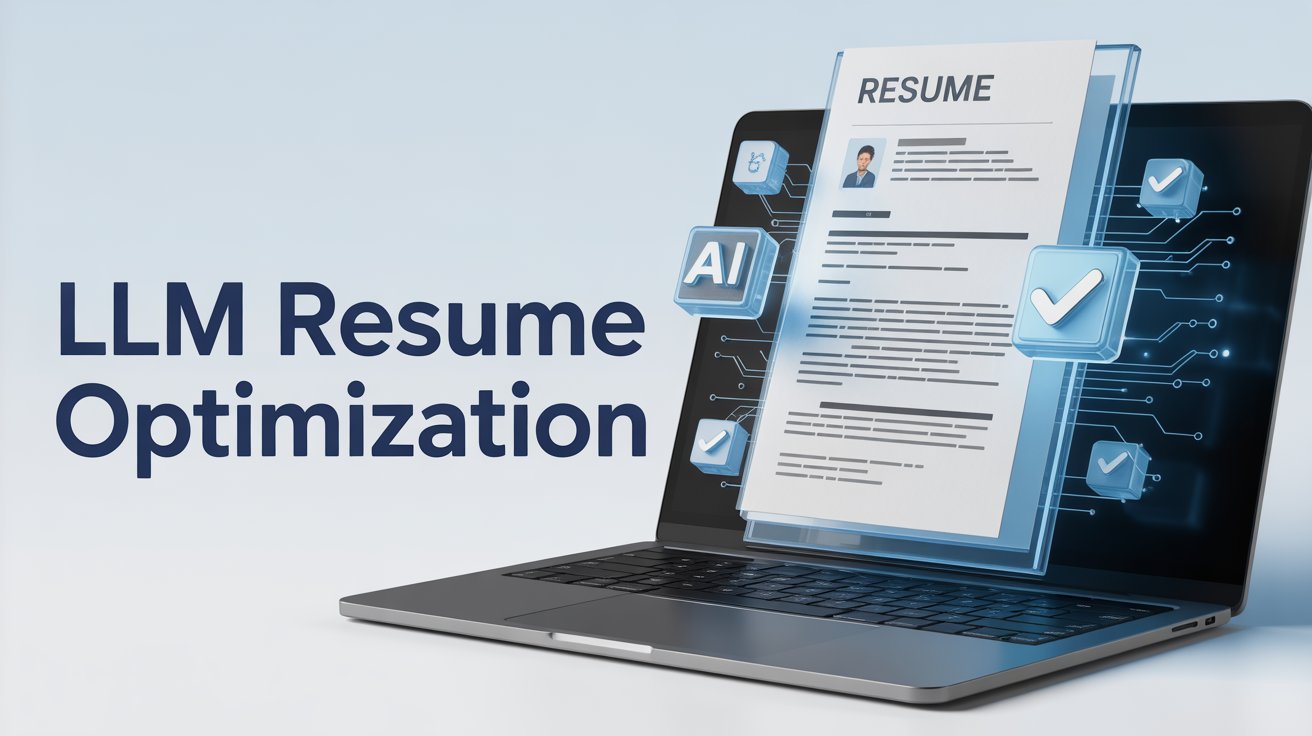
Today, your resume passes through an LLM-based screening layer before a human ever sees it. These systems don’t get tired. They don’t skim. They parse, score, rank, and — in many cases — eliminate. And they do it using logic that most applicants never think about.
The rules haven’t just shifted. They’ve been rewritten entirely. Here’s how to win under the new ones.
What’s Actually Happening When You Submit a Resume Today
Let’s be precise about what “LLM-based recruitment filters” actually means, because the term gets used loosely.
Older applicant tracking systems (ATS) like Taleo or Greenhouse were keyword matchers. They looked for specific strings. You could game them by stuffing terms into white text at the bottom of your document.
Modern LLM-based filters work differently. Systems like Workday AI, Eightfold, HireVue, Beamery, and similar tools use large language models to understand context, not just match strings.
Here’s why this distinction matters:
Old ATS logic: Does the word “Python” appear?
LLM filter logic: Has this candidate demonstrated Python in a context that suggests relevant depth?
One looks for presence. The other infers meaning. That shift changes everything about how you need to write.
According to a 2024 report by the Society for Human Resource Management (SHRM), over 65% of enterprise companies now use AI-assisted screening tools in at least one stage of their hiring funnel. For roles receiving over 200 applications, that number climbs above 80%.
Your resume isn’t just being read. It’s being evaluated by a system trained to predict fit.
Why Most Resumes Fail the LLM Layer
There are a few consistent failure patterns. Understanding them is the fastest path to fixing them.
1. Semantic Misalignment
The job description uses specific language. Your resume uses different language to describe the same thing.
Think of it like this: a job posting says “cross-functional stakeholder management.” Your resume says “collaborated with different teams.” An LLM model reads both. It understands they’re related — but it also ranks candidates whose language mirrors the job description’s semantic field higher than those whose language diverges from it.
This isn’t about keyword stuffing. It’s about semantic proximity. LLMs score based on how closely your experience maps to the role’s described need — conceptually and linguistically.
2. Context Without Depth
Most professional resume builders use the same pattern:
“Led initiative that improved X by Y%.”
That line signals an outcome, which is good. But LLM-based filters trained on role-matching prioritize contextual specificity. They’re trying to answer: Does this candidate’s past environment match the complexity of our role?
A number without context is a weak signal. A number with context — team size, tools used, stakeholder complexity, decision scope — is a strong one.
3. Skills Listed, Not Demonstrated
Listing “data analysis” in a skills section does almost nothing for an LLM filter. It’s noise. What the model is looking for is evidence of that skill in a real work context. Demonstrated skills inside achievement bullets carry exponentially more semantic weight than skills in a standalone list.
4. Format Entropy
LLMs parse text. Anything that disrupts clean text parsing — icons, headers embedded in images, multi-column layouts, unusual fonts, tables — reduces parsing accuracy. Some of the most visually impressive resumes are the worst performers with LLM filters because the model can’t extract a clean signal from the layout.
The Resume 3.0 Framework: Writing for LLM Comprehension
Here’s the mental model: stop writing a resume that looks impressive and start writing a resume that reads clearly to a language model trying to match you to a role.
That doesn’t mean boring. It means intentional.
Step 1: Mirror the Job Description’s Language Architecture
Before writing a single line, analyze the job description. Look for:
- Core function language (how they describe the role’s central purpose)
- Outcome language (the results they expect)
- Tool and platform specificity (what systems they reference)
- Seniority signals (words like “lead,” “own,” “define,” “drive” versus “support,” “assist,” “contribute”)
Now map your experience against those categories. Use their vocabulary where your experience genuinely matches. You’re not fabricating — you’re translating your real experience into the semantic register the model is trained to recognize.
Example:
Job description says: “Drive adoption of data-driven decision frameworks across business units.”
Weak resume line: “Helped teams use data better.”
Strong resume line: “Led adoption of analytics-based decision frameworks across 4 business units, replacing spreadsheet-based reporting cycles and reducing cycle time by 40%.”
Same experience. Completely different semantic match score.
Step 2: Layer Context Into Every Achievement
The formula for an LLM-optimized achievement isn’t just:
Action + Result
It’s:
Context + Action + Method + Result + Scale
| Element | What It Communicates |
| Context | The environment and stakes involved |
| Action | What you specifically did |
| Method | How you did it (tools, frameworks, approach) |
| Result | The measurable outcome |
| Scale | How big, how many, how fast |
Not every bullet needs all five. But three or more is the floor.
Step 3: Distribute Skills Through Evidence, Not Lists
Take your skills section. Now ask: can I prove each of these inside an achievement bullet?
If yes, remove the standalone mention and let the bullet carry the weight.
If no, you either need to find the context where you demonstrated it or reconsider whether it’s truly a core skill worth claiming.
LLM filters weight in-context skill evidence far above decontextualized skill labels. A model trying to evaluate whether you can “manage enterprise SaaS implementations” will be far more persuaded by a bullet describing a real implementation at scale than by seeing “SaaS Implementation” in a side column.
Step 4: Engineer Your Summary for Intent Classification
Most LLM-based systems read your summary section first as a classification signal. They’re trying to answer: what type of candidate is this?
Your summary shouldn’t be a general overview of your career. It should be a dense, precise signal broadcast that tells the model exactly which category you belong to, what level you operate at, and what kind of value you deliver.
Generic summary:
“Experienced marketing professional with a track record of driving results across various industries.”
LLM-optimized summary:
“B2B demand generation leader with 8 years of building pipeline at Series B through public SaaS companies. Specializes in account-based marketing strategy, revenue operations alignment, and scaling inbound programs from $0 to $3M in annual pipeline contribution.”
One is a vague descriptor. The other is a classification-ready signal package.
Step 5: Use Clean, Parseable Structure
This is the unglamorous part. But it matters.
- Single-column layout (or clean two-column with consistent text flow)
- Standard section headers: Experience, Education, Skills, Certifications
- No text in graphics, icons, or images
- ATS-safe fonts (Georgia, Garamond, Calibri, Arial — not design fonts)
- PDF exported from Word or Google Docs, not design tools like Canva or Figma
- No headers/footers containing critical information
- Consistent date formatting throughout
An LLM filter that can only partially parse a beautifully designed resume will score it lower than a plain resume that it can read in full.
Human Review Still Matters — But It Comes Later
Here’s something worth understanding: the human recruiter’s job has changed.
They’re no longer doing first-pass filtering. The AI does that. What they’re doing is reviewing the top cohort the AI surfaced and making judgment calls the AI can’t reliably make, such as cultural fit, career trajectory patterns, and potential.
This means your resume needs to pass two evaluations:
- LLM layer: Semantic match, context density, role alignment
- Human layer: Narrative coherence, career story, credibility signals
Resume 3.0 isn’t about sacrificing readability for machine optimization. It’s about ensuring the machine surfaces you, so the human can see you.
What Changes If You’re Targeting Multiple Roles
You need a different resume for meaningfully different roles. Not a completely different document — but a semantically customized version.
The practical workflow:
- Keep a master resume with full achievement details
- For each application, create a tailored version:
- Adjust the summary to mirror the role’s function language
- Reorder and re-emphasize bullets that align with the specific JD
- Replace divergent terminology with the JD’s own language where your experience supports it
- Run your tailored resume through a tool like Jobscan, Resume Worded, or even a basic ChatGPT prompt asking it to compare your resume against the job description
This process takes 20–30 minutes per application but meaningfully changes your pass-through rate.
The Bigger Shift: LLMs Are Training on New Data Constantly
Here’s the forward-looking reality.
LLM-based hiring tools are being updated. The models that screen resumes in Q4 of this year will be more sophisticated than the ones running now. They’re getting better at detecting context inflation, spotting inconsistencies between claimed experience and demonstrated depth, and flagging resumes that feel optimized but lack substance.
The long-term defense isn’t optimization tactics. It’s genuine depth, clearly communicated.
The candidates who will consistently beat LLM filters, both now and as the technology evolves, are the ones who do real work, understand what they did and why it mattered, and can communicate that with precision.
Resume 3.0 isn’t a hack. It’s a discipline.
Conclusion
The hiring funnel didn’t just get digitized. It got restructured around AI comprehension.
Most candidates are still writing for a reader who evaluates on first impression. The actual first reader today is a language model that evaluates on semantic relevance, contextual depth, and role alignment.
The good news: once you understand how these filters work, the optimization isn’t that complex. Mirror the job description’s language. Add context to every achievement. Let your skills speak through evidence. Write a summary that classifies, not just describes. Keep your format clean.
You’re not gaming the system. You’re communicating more precisely with a system that’s trying genuinely to find the right match. Your job is to make that match unmistakably obvious.
The candidates who figure this out early will have a structural advantage in every application cycle that follows.
Frequently Asked Questions
Q1: Do I need a completely different resume for every job application?
Not completely different, but meaningfully customized. The core content — your experience, achievements, and structure stays consistent. What changes is the language layer: how you describe your summary, which bullets you lead with, and whether your terminology mirrors the job description’s semantic field. Even 30 minutes of targeted customization can substantially improve your match score with LLM-based filters.
Q2: Will keyword stuffing still work with modern AI screening tools?
No. In fact, modern LLM-based systems are increasingly trained to detect and penalize over-optimization signals. Keyword stuffing worked on legacy ATS tools that did simple string matching. LLMs evaluate contextual coherence. A resume that lists the same keyword twelve times without substantive context will score poorly on relevance and may be flagged as low-quality input.
Q3: Should I list every technology and tool I’ve ever used?
Only if you can back it up with in-context evidence somewhere in your experience section. A skills list without demonstrated use is weak signal. Prioritize tools that appear in the job description and that you can reference meaningfully in at least one achievement. Quality of demonstrated competence outperforms quantity of listed skills.
Q4: Does resume length matter for LLM screening?
Less than it used to for the screening layer — LLMs can process longer documents easily. But human reviewers still review shorter, denser resumes faster. The guidance: one page for under five years of experience, two pages for most professionals, three pages only for highly senior roles with extensive publication or project records. Brevity with depth is still the goal.
Q5: How do I know if a company uses LLM-based screening?
You often won’t know for certain. But if a company uses Workday, Greenhouse, Lever, iCIMS, or SAP SuccessFactors — and especially if they’re a mid-to-large enterprise — assume AI-assisted screening is part of the funnel. When in doubt, apply Resume 3.0 principles regardless. They make your resume better for every reader, human or model.
Q6: Can I use AI tools to help write my resume?
Yes — with an important caveat. Use AI tools to help you articulate your experience more precisely, not to fabricate it. A useful approach: describe what you actually did in a role to an AI tool and ask it to reframe that into achievement-format language. Then verify that the output genuinely reflects your experience before including it. AI-assisted drafting is practical. AI-generated experience you don’t have is a liability that will surface in interviews.
Q7: What’s the most important single change most candidates can make?
Rewrite your professional summary. Most summaries are vague, generic, and semantically uninformative. A precise, role-specific summary that signals your function, level, and value type immediately improves how an LLM-based system classifies your profile — and how a human recruiter reads your intent. It’s the highest-ROI edit on most resumes.